The Diamond Light Equation: Why Table Spread Lies and Pavilion Angles Rule
"Deconstructing optical physics, light leaks, and the true geometry of natural diamond fire."
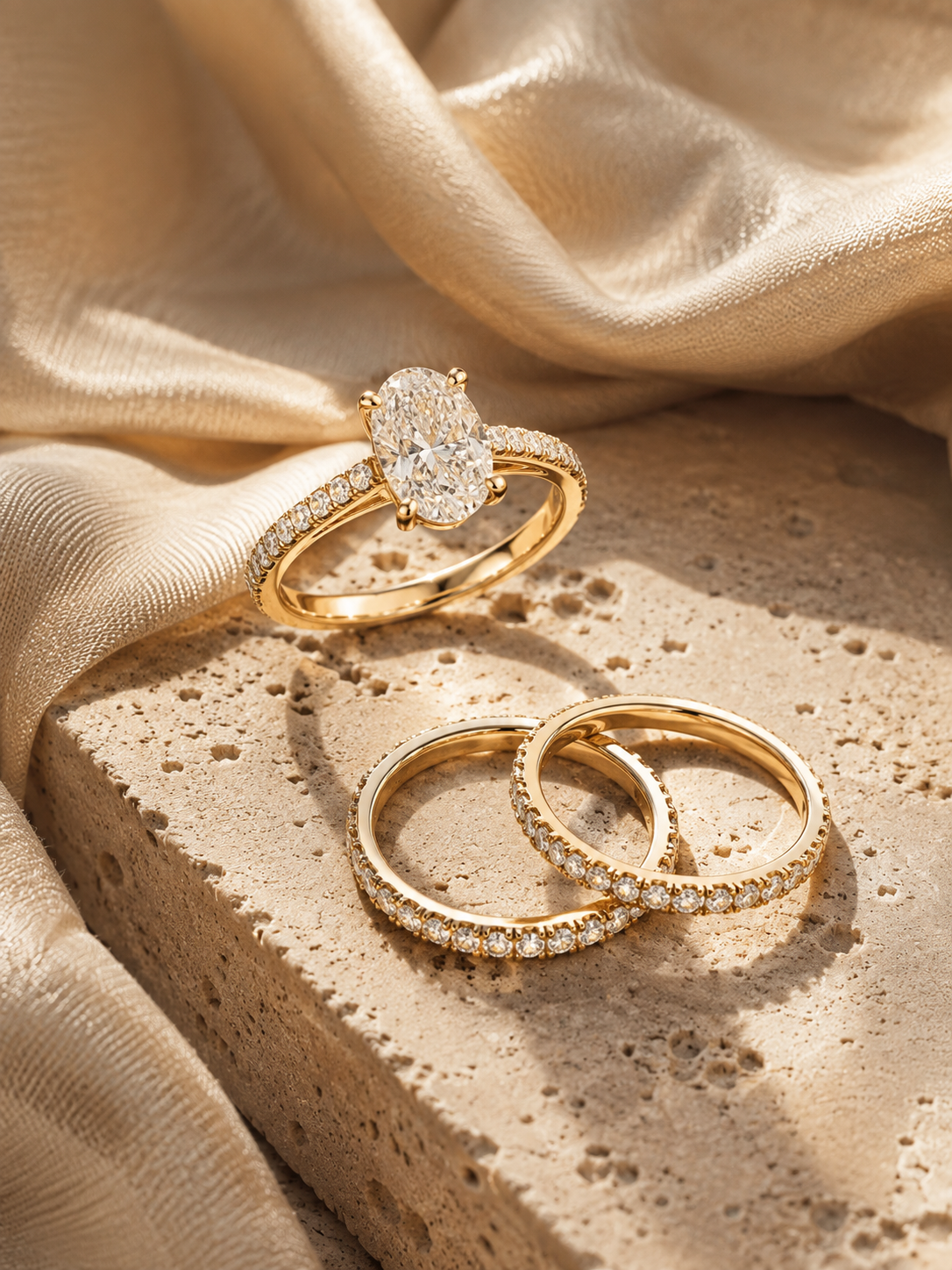
In commercial diamond grading, carat weight is the easiest metric to price, but the most misleading indicator of visual beauty. A heavy diamond with a shallow pavilion simply acts like a window, allowing light to pass straight through without returning brilliance to your eyes.
"A smaller diamond cut to perfect 40.8-degree pavilion angles will invariably outshine a larger, shallow-cut stone across any candlelit room."
Total Internal Reflection is the optical engine of a great solitaire. When a light ray strikes the crown facets, it must refract at precisely calculated angles, reflect off the opposite pavilion facet, and return upward through the table with vivid dispersion into rainbow spectral fire.
At Civara, we reject stones with steep crown angles or excessive pavilion depth, selecting only stones whose optical proportions fall within the tightest tolerances of the Tolkowsky ideal cut formula.
Our gemmologists individually inspect each certified stone under polarized light filters to ensure exceptional crystal strain transparency, zero haziness, and breathtaking scintillation in natural daylight.
Further Atelier Notes
Founder's Note: Why Quiet Luxury
When fine jewellery stops shouting for attention across the room, an intimate relationship begins between the jewel and the skin that wears it.
The Making of an Elara: From Molten Bullion to Solitaire
Behind the fluid silhouette of the Elara Solitaire lies 18 hours of micro-lapidary benchwork, zero-porosity casting, and microscopic claw alignment.